

Cheap vs. Expensive Cabinet Makers: What You’re Actually Paying For
When you start pricing out custom cabinets, the range can feel absurd. One quote comes in at $8,000. Another comes in at $28,000. Same kitchen, same square footage, same “cabinets”.
So what’s going on?
It’s a fair question, and it deserves a straight answer instead of a sales pitch. So here’s the honest breakdown of what separates a cheap cabinet job from an expensive one, and how to figure out which one you’re actually looking at.
Think of it Like Buying a Car
A $15,000 economy car and a $60,000 luxury sedan will both get you to the grocery store. Both have four wheels, a steering wheel, and air conditioning. On paper, they do the same job.

But open the hood, and the differences show up fast: engine tolerances, materials, how many hours of engineering went into the suspension, how the doors are welded, what happens in a crash. You’re not paying 4x for the badge.
You’re paying for what’s underneath the surface that you can’t see in the showroom.
Cabinets work the same way. Two cabinets can look nearly identical in a photo and be built from completely different worlds.
Where the Money Actually Goes
Materials. Cheap cabinets are often built from thin particleboard with a printed laminate skin trying to pass as wood. Expensive cabinets use real plywood boxes, solid hardwood face frames, and finishes that are meant to hold up under 15 years of steam, grease, and slammed doors, not just look good on install day.
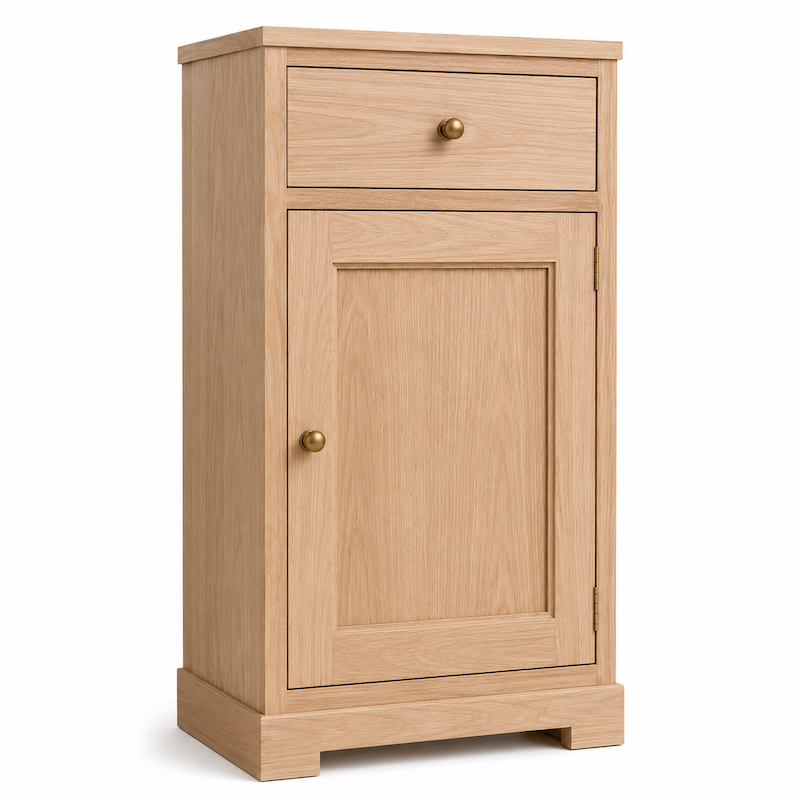
Joinery. This is the part nobody photographs. Stapled and glued boxes are fast and cheap. Dovetailed drawers, mortise-and-tenon doors, and properly reinforced corners take real time on a real machine or a real workbench. That time is labor, and labor is money.
Hardware. A soft-close hinge that’s still working smoothly after 50,000 openings costs more than one that’s still working smoothly for the length of the warranty and not much longer. This is one of the most common places builders cut corners because customers rarely notice until year three.
Design time. A cheap job usually means picking from a catalog of stock sizes and hoping your kitchen cooperates. An expensive job means someone actually measured your space, thought through your workflow, and built cabinets that fit your need and your kitchen instead of the other way around.
The person actually building it. This one matters more than people expect. A rushed installer working four jobs a week versus a builder who takes on fewer projects and treats each one like it has their name on it, that difference shows up in every drawer glide and every flush seam for the next two decades.
The Real Question Isn’t “Cheap or Expensive”
It’s “what am I actually buying, and how long do I need it to last?”
If you’re flipping a house and won’t be the one living with the cabinets in five years, the cheaper option might be the right call. There’s no shame in that math.
But if this is the kitchen you’re cooking dinner in for the next 15 or 20 years, the one your kids do homework at, and the one you’re standing in every single morning, the cabinets you choose aren’t just a purchase.
They’re infrastructure for your daily life.
And infrastructure is exactly the wrong place to find out later that you cut too many corners.
How to Tell What You’re Really Getting
Whatever quote you’re holding, ask these questions:
- What’s the box material: particleboard or real plywood?
- Is it a stock size, or built for my actual space?
- Who’s the hinge and drawer glide manufacturer?
- What does the joinery look like, not just the finish?
- Who is physically building this, and how many other jobs are they juggling this month?
A builder who’s proud of their work will answer every one of those without hesitating. A builder who’s cutting corners will steer you back to the price.
At ModernTwenty, every cabinet is designed and built to fit your space and your life, not pulled off a shelf. If you’re comparing quotes and want a straight answer about what you’re looking at, reach out and I’ll talk it through with you.